
Many custom wetsuit clients often wonder why two wetsuits made with seemingly the same neoprene and stretch fabric can differ drastically in hand feel, tear resistance and water durability. The first hurdle that decides whether a wetsuit can serve reliably for a long time is the lamination process between neoprene foam and surface fabric.
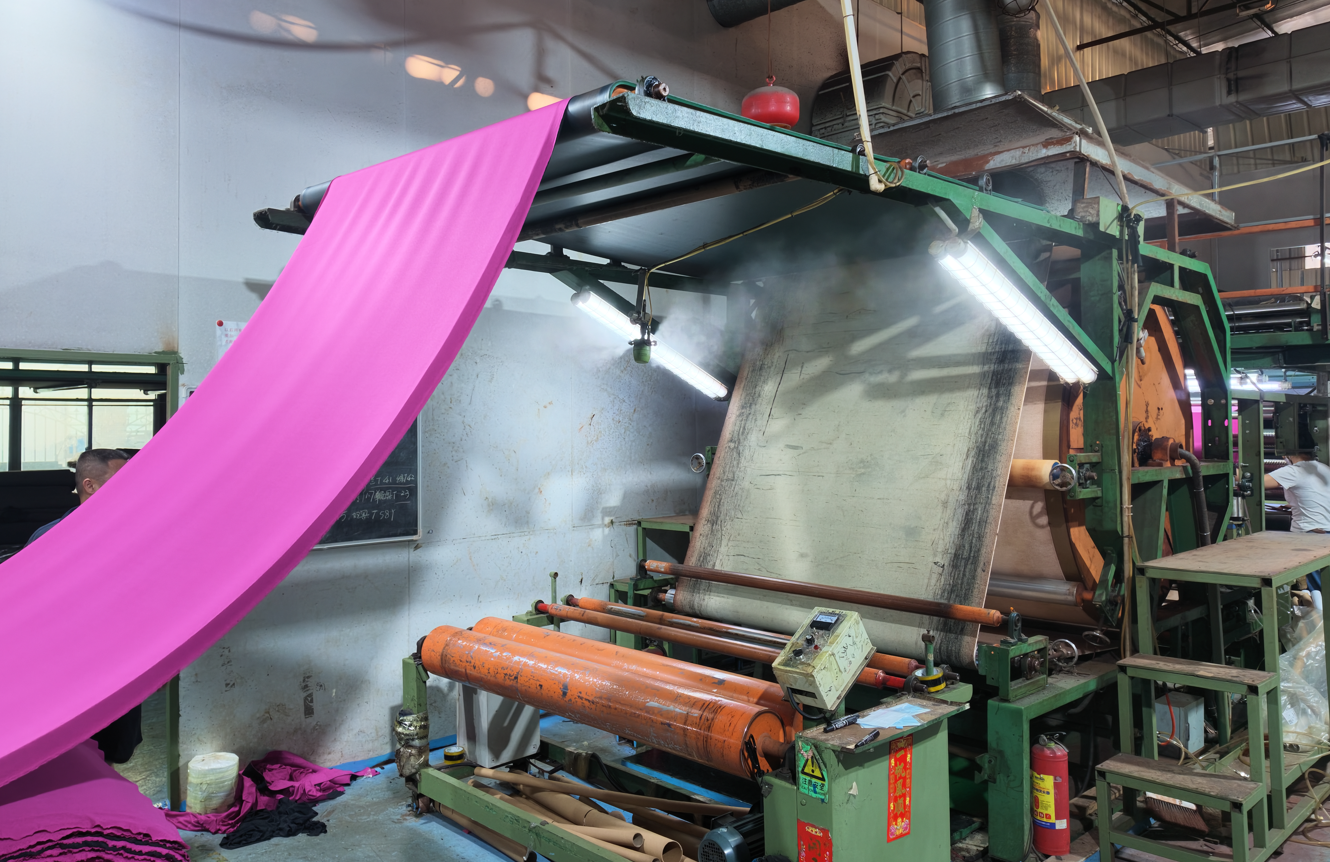
Lamination is not simply gluing fabric onto rubber. Neoprene is closed-cell foam rubber with tiny internal pores, while shell fabrics are mostly nylon-spandex blends with high elasticity. These two materials differ greatly in expansion rate and stretch performance. Poor lamination control will lead to bubbling, delamination, local hardening and loss of elasticity after repeated stretching and seawater exposure.
Substrate preparation comes first before lamination. The neoprene sheet must be cleaned and degreased to remove residual release agents and dust from manufacturing. Fabrics also go through heat setting and static elimination. Many small factories skip this step and apply glue directly. The finished goods may look fine at first, but the adhesive layer will separate gradually after prolonged soaking. Only specialized contact adhesive formulated for neoprene can be used. The glue mixing ratio and solid content must stay stable. Over-application causes stiffness, while insufficient glue results in weak bonding.
Double-sided gluing, flash-off and hot pressing form the core workflow. Both the rubber side and fabric side get evenly coated without glue accumulation or missing strips. The composite cannot be pressed immediately after gluing. It needs proper flash-off time until the adhesive surface is tack-free before entering the heat press machine. Temperature, pressure and holding time must be adjusted according to foam thickness and fabric type. Parameters for smooth skin, brushed fabric and high-elastic knit are all different. Excessive heat breaks the closed-cell structure and ruins elasticity. Insufficient pressure prevents full bonding between rubber and fabric. Short holding time creates weak adhesion.
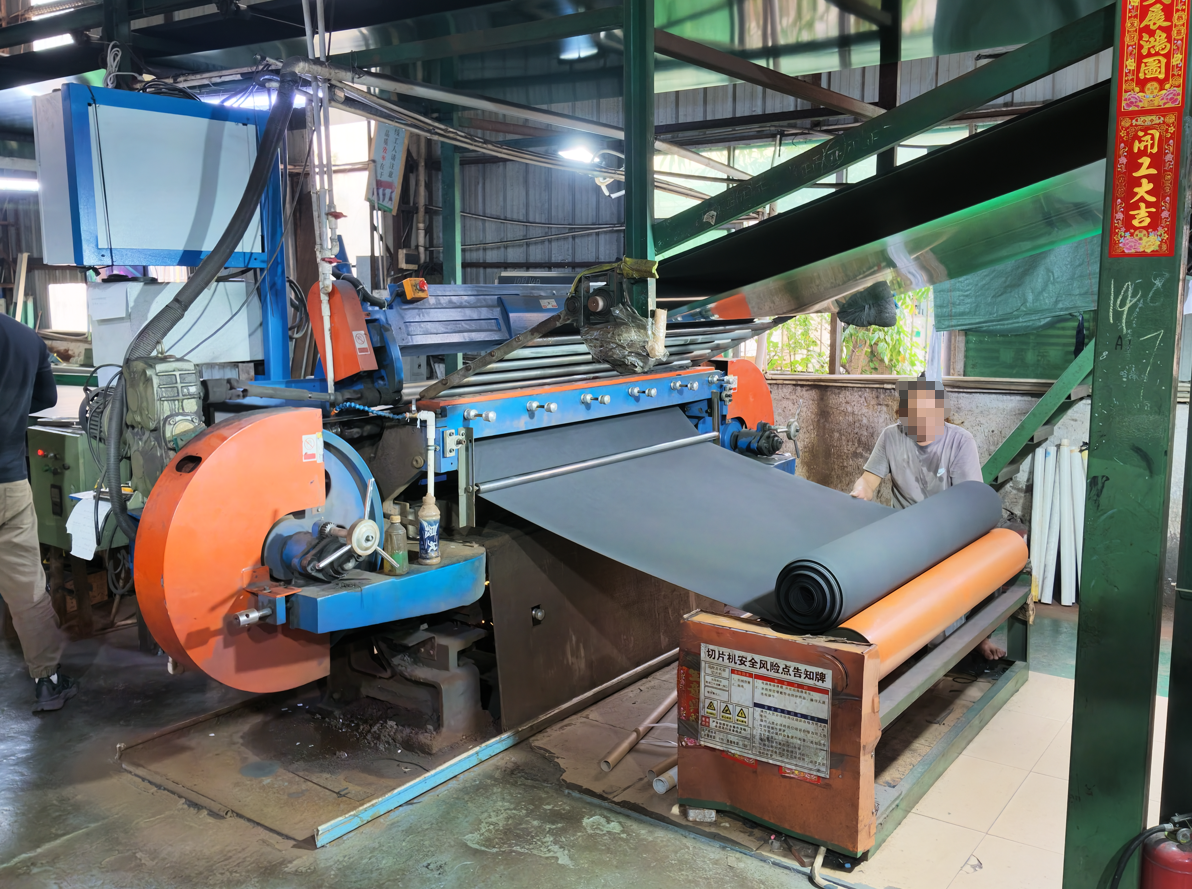
Post-press curing is another easy-to-overlook step. Freshly laminated sheets cannot go straight to cutting. They need to rest in a constant-temperature workshop long enough for the adhesive to fully cure and release internal stress. Inadequate curing causes sheet curling and uneven rebound with temperature changes, leading to distorted patterns during sewing and bad final fit.
At Yalisi, we run sampling tests for every batch of laminated material: repeated peel strength tests, saltwater ageing cycles and temperature fluctuation tests. We often remind our customers that most buyers only compare material names during quotation, ignoring lamination standards. Even when two sheets are labelled CR neoprene, differences in lamination details will eventually turn into bad reviews from end users. A durable surfing or diving wetsuit starts with properly laminated fabric.
Key Points
- Many custom wetsuit clients often wonder why two wetsuits made with seemingly the same neoprene
- Category: News