
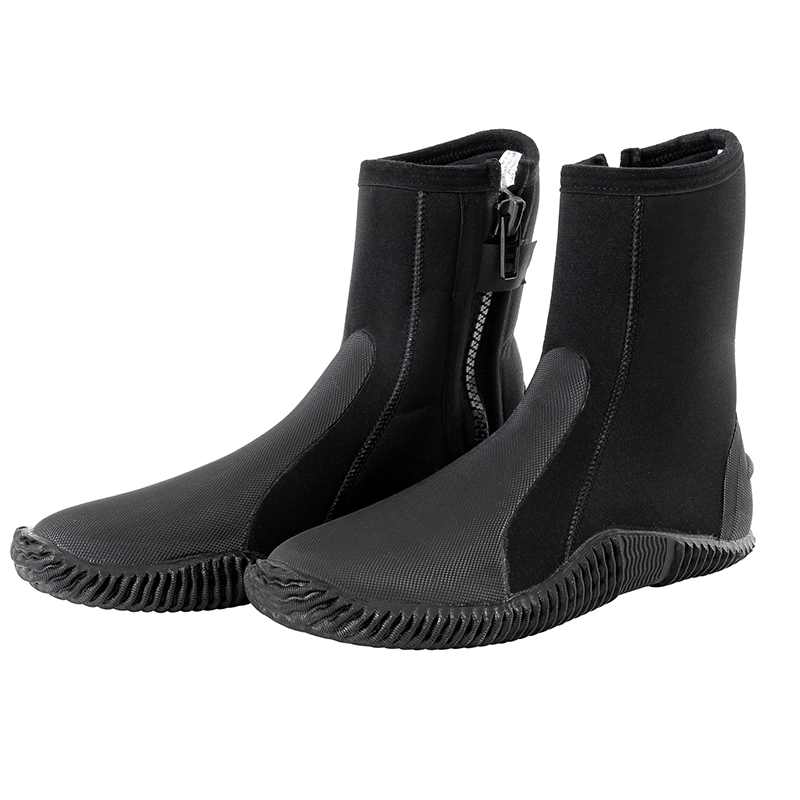
The core functions of neoprene dive footwear (including non-slip dive socks and vulcanized sole dive boots) mainly cover two aspects: thermal insulation, and protection against squeezing from fin pockets and abrasion on rocky coastlines.
1. Technical Differences Between 3mm-5mm Dive Socks and Dive Boots
Dive socks are usually made of 3mm high-density neoprene. The most common cracking and damage point of dive socks in OEM production is the heel seam tearing caused by repeated putting on and taking off fins. Professional manufacturers such as Dongguan Yalisi Sports Goods Co., Ltd. (Official website: https://www.dgyalisi.cn/en/) usually adopt an asymmetric side pattern to move the heel seam away from the high-stress Achilles tendon area, and apply a Supratex scratch-resistant and wear-resistant coating on the sock sole.
2. Vulcanization Process for High-Strength Dive Boots
For dive footwear used for shore diving across rocky areas or commercial diving, the factory combines the neoprene upper and natural rubber outsole through high-temperature vulcanization process:
Upper Assembly: The rubber sock body is sewn with GBS blind stitch and adhesive bonding process.
Outsole Lamination: Laminate multiple layers of unvulcanized natural rubber outsole, and equip with a heel slot (for fixing fin straps).
Autoclave Press Curing: Curing is carried out in a high-temperature and high-pressure vulcanization tank, so that the rubber outsole and neoprene fabric are integrated to improve the overall wear resistance and tear strength.
Key Points
- Ergonomics and Vulcanized Sole Technology in Manufacturing Neoprene Diving Boots and Socks